improvscience designs and implements programs that develop scientists’ ability to communicate and collaborate with one another. This video highlights work with organizations and communities that contribute to improving our science enterprise.

Once the presentation is outlined, slides created and the talk scripted, what do you do? You perform! In this improvscience professional presentations clip, we see a graduate student before and after coaching in the community building, improvisation based workshop.

Meet Dr. Nicholas Gross, a scientist-educator, who leads conversations on the role of improvisation in STEM classrooms. In this video interview, he shares how improvisation provides a language for the kinds of interactions desired in the classroom.
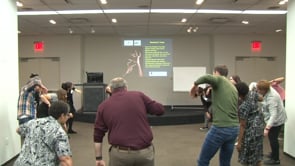
This 2012 CESTEMER meeting brought together researchers and practitioners from a variety of scientific and educational backgrounds to explore the variety of performances being done in science and science education.

The Living Improv Experiment (LIVE) was created in response to the question, What can we do to engage people in science and demonstrate the power of improv in communication? Our answer: share our humanity. LIVE is improvised entertainment featuring scientists' lives.

improvscience interviewed graduate students, faculty, postdocs and theater practitioners on the relationship of performance and improvisation to science. Sofya shares what she sees as play in science.

The All Stars Project, Inc. excels at bringing people together from different backgrounds. This video, from the first Science and Math Day of UX, shows Dr. Holmes and Dr. Martinez leading participants in an improvisational game to support people getting to know one another.

The Extreme Science and Engineering Discovery Environment (XSEDE) conference is held annually. The trailer here shows the success of the diversity efforts led by Dr. Richard Tapia and the improvscience interactive challenge.